Revisiting the Master System games from my childhood (Part 2)
Quick housekeeping note: Reply notifications are now enabled in the comments. If you’ve commented in any of the previous days comments have been active, I have replied, but you probably didn’t see them. From now on you should be notified about replies if you leave the box ticked.
My earliest console gaming memories are on my granddad’s Master System. Since getting into retro handhelds, I’ve been revisiting the Sega Master System games from my childhood. Check out Part 1 for more!
Super Monaco GP
My granddad and I agreed: this game sucked. But I was interested to find out: were we right in this appraisal? Yes, yes we were.
Super Monaco GP on the Master System was a cash-in on the acclaimed game of the same name on the Mega Drive. It’s an 8-bit racing game with a sort of pseudo “3d” perspective. It’s ugly, it’s boring, and it’s for some reason always in split-screen mode, even in 1-player (you just play in split-screen against a computer player two). The courses take 5-6 minutes, and there’s 16 of 'em. A whole stinking hour and a half of painfully dull F1 racing, in which you’ll almost certainly lose every race.
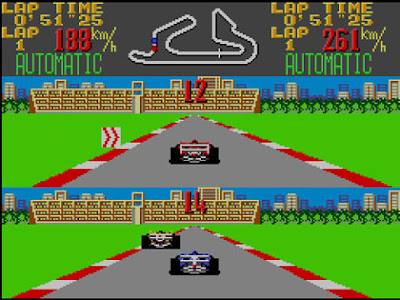
You can customise your vehicle between races, and are encouraged to do a test lap of the track with your setup to check it is suitable, but that would involve dragging out the experience even more.
I played it for this post, and I’ll be happy to never play it again. Next.
Marble Madness
As I mentioned in the last post, the D-pad on my granddad’s old controller sucked, so succeeding in high-precision games was hopeless. Air Rescue went from brutal to trivial with nothing more than a change of pad. So I was looking forward to trying out Atari’s Marble Madness, a ball-rolling skill game akin to Super Monkey Ball but from an isometric perspective,[1] which was impossible on my granddad’s hardware.
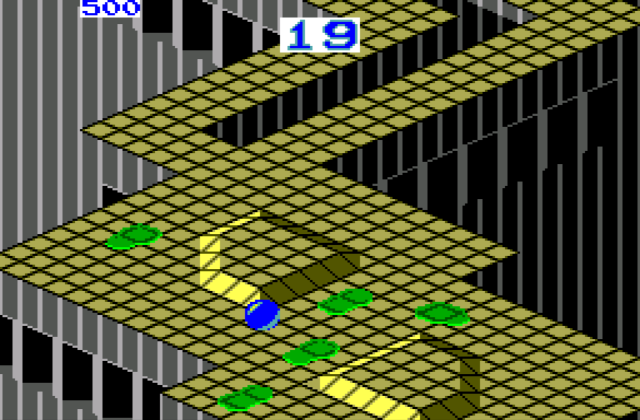
Turns out… it’s still fucking impossible. The entire game is around 6 minutes long. Six courses, each with around a minute on the clock. Each course has uneven terrain, obstacles, and “enemies” of sorts which either block or temporarily destroy your marble, costing precious seconds. As far as I can tell, unless you have unbelievable skill, it’s often better just to race through, get hit and respawn rather than slow down and carefully navigate some of the ludicrously precise gauntlets the game throws at you.
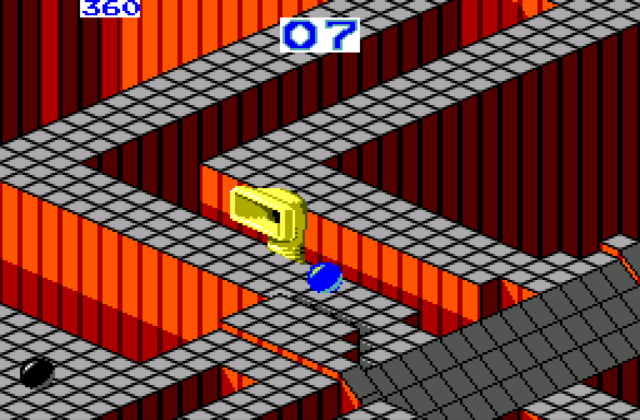
My only progress was on the original hardware I could get to stage 4. Now I can get to stage 5.
My understanding is this was originally an arcade game with a trackball input. That may have made it more approachable, I don’t know. If you have a retro handheld or Sega emulator on your computer, give Marble Madness a go, let me know if you can do any better.
Sonic The Hedgehog 2
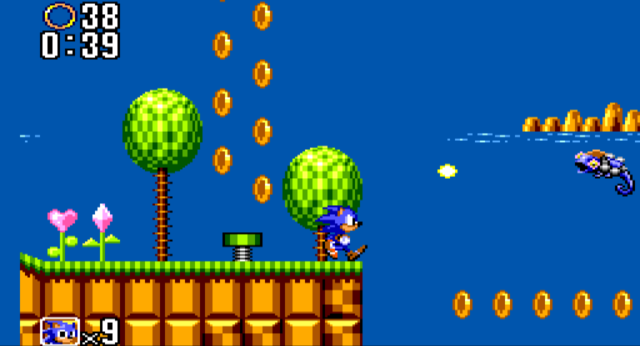
Now, this was an absolute delight to play. An improvement on the already-decent 8-bit version of Sonic The Hedgehog in every way. Whereas the original tried to be an 8-bit version of the Mega Drive classic, its sequel was completely unmoored from its Mega Drive counterpart. None of the zones or new mechanics are replicated. The only commonality is the introduction of Miles Prower[2], aka. Tails, named for being a fox with two tails. Unlike the Mega Drive, Tails isn’t playable, but is in need of rescue from the evil Dr Robotnik. This game didn’t get a US release at all until it was available to emulate on Wii.
I never finished this as a child, but I did see most of the game because at some point I learned a cheat — a level select menu, likely left in from playtesting and debugging. It involved plugging the controller into port 2, holding a button combination during the intro sequence, switching over to port 1, then pressing button 2 twice.
Some things are gone altogether from both the Mega Drive version and its Master System predecessor. Levels no longer have checkpoints,[3] the “shield” item is gone, and there’s no Special zone. However, a much-welcomed mechanic is the return of ring recovery after being hit. If you remember from my last post, this Mega Drive mechanic was cut in the original 8-bit game as the hardware couldn’t render so many rings on screen, but Sonic 2 compromises by limiting the number of dropped rings to about 7, at least giving you a chance to grab one ring and survive another hit. Also coming from the Mega Drive games are breakable walls and loop-the-loops, though with simplified physics.
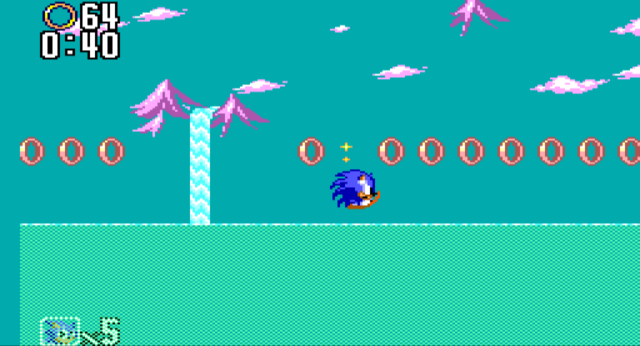
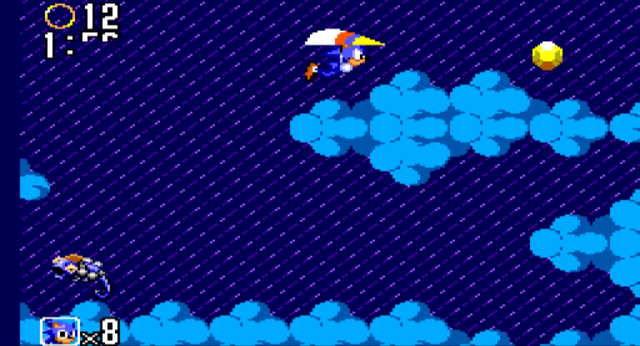
The real heart of this game, of course, is its levels. Each stage has a gimmick, in a good way. Sonic gets new ways to traverse the levels, including hang gliding (which genuinely takes a bit of practice!), launching from fly-wheels, and so on. Even the water levels, usually a nightmare in Sonic, are pretty fun because they introduce several traversal mechanics: Sonic can bounce on the surface of the water by rolling at speed, enter large bubbles which can be steered while slowly rising, and navigate maze-like systems of pipes requiring quick-thinking to choose a direction at the junctions.
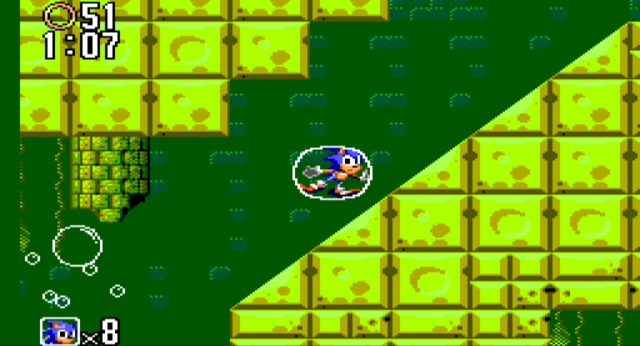
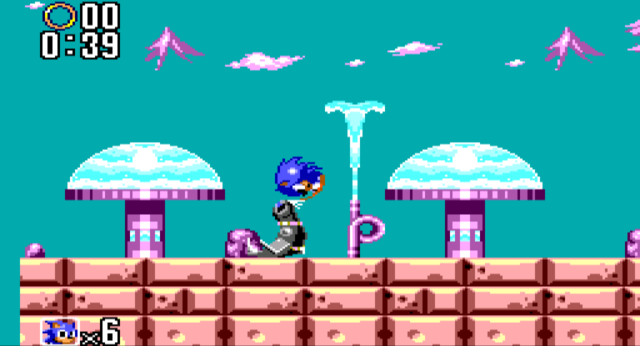
The bosses are… Okay, I guess. They’re fun enough to fight, but not very visually impressive, probably a hardware limitation.
My main complaint is a kind of old school difficulty thing. The game is not too difficult mechanically, and it’s pretty easy to acquire extra lives in each level. However, the final zone is locked if you don’t find a hidden Chaos Emerald in each preceding zone, or if you use a continue at any point, meaning you can lock yourself out of getting the proper ending easily — even in the first level. Instead you get the bad ending, in which it is implied that Tails has fucking died even though you successfully completed all the levels up to that point. Back then this would have been considered acceptable for creating replay value. Now it just feels annoying.
Anyway, definitely play this one if you only ever played the Mega Drive games. It’s cool.
See you again for the final part of this series.